Physical Address
304 North Cardinal St.
Dorchester Center, MA 02124
Physical Address
304 North Cardinal St.
Dorchester Center, MA 02124

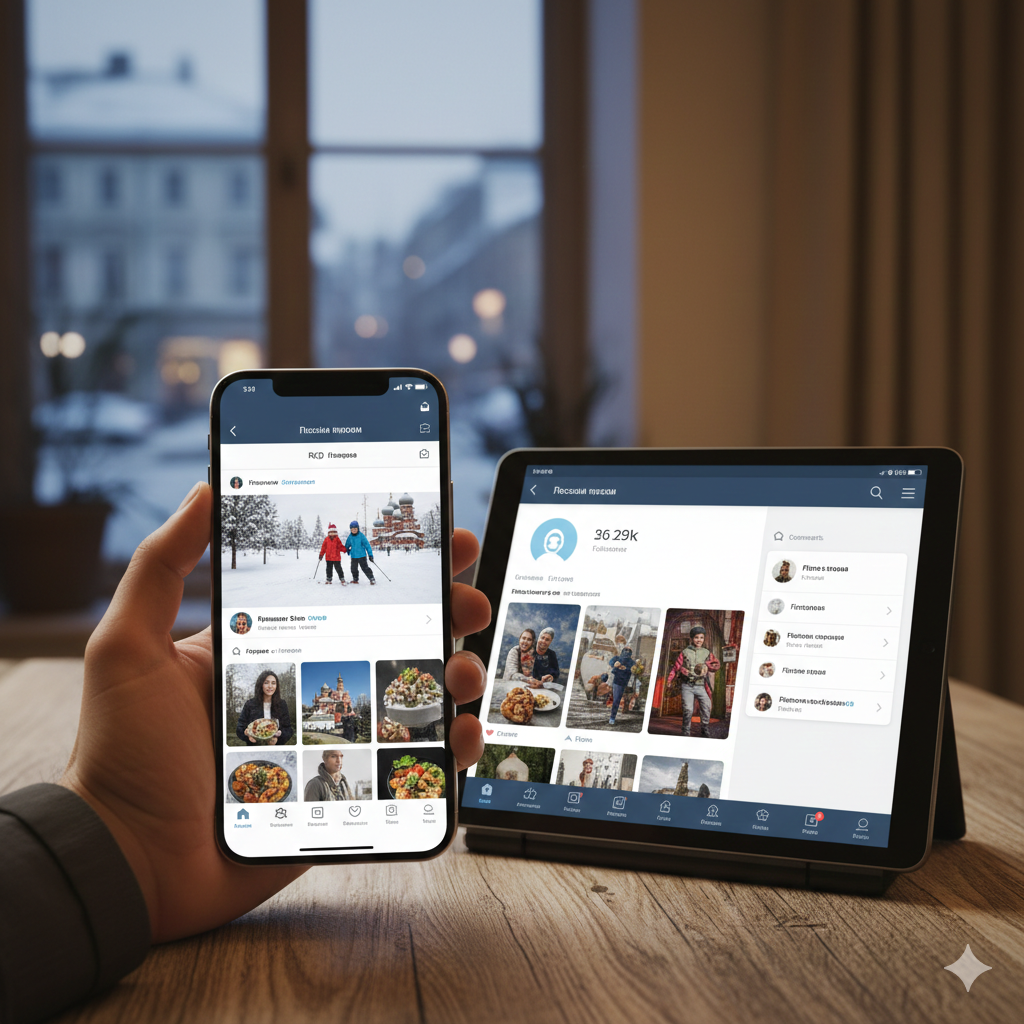
Updated Russian social network stats for 2026: Yandex search share, VK audience metrics, Odnoklassniki reach, messenger trends, and how platform blocks reshaped Russia’s social media landscape. Includes metrics table + FAQ.
 Russia has one of the world’s most distinctive digital ecosystems. While many countries revolve around the same handful of global platforms, Russia’s online life is shaped by powerful domestic players (especially Yandex and VK) and the realities of platform access restrictions.
In this “By the Numbers” update, we’ll focus on current, verifiable Russian social network and internet stats—with older figures kept only when they’re clearly labeled by year.
Yandex leads Russian search with about 70.5% market share (Jan 2026). Russia’s largest domestic social platform ecosystem, VK, reported a 77 million average daily audience across its services (Q2 2024), while VKontakte reported about 89 million MAU in Russia (Q1 2024). Odnoklassniki remains a major network, reported at ~36 million monthly active users (Q3 2024 reporting). Western platforms still matter culturally, but access and usage patterns are strongly shaped by regulation and blocking.
| Metric | Stat | Year / Source Context |
|---|---|---|
| Yandex search engine share (Russia) | ~70.5% | January 2026 (StatCounter) |
| Google search engine share (Russia) | ~27.4% | January 2026 (StatCounter) |
| VK services average daily audience (DAU) | 77 million | Q2 2024 (VK reporting) |
| VKontakte monthly audience in Russia (MAU) | 89 million | Q1 2024 (VK reporting) |
| VKontakte daily audience in Russia (DAU) | 57.3 million | Q1 2024 (VK reporting) |
| Odnoklassniki monthly active users | ~36 million | Q3 2024 reporting tied to VK results |
Unlike many markets where global platforms dominate every layer, Russia’s core daily-use stack includes domestic giants—especially Yandex (search + services) and VK (social + media + messaging + creator tools). That doesn’t eliminate global services, but it changes the balance of power and advertising dynamics.
Search behavior is one of the clearest “by the numbers” indicators of digital dominance. As of January 2026, StatCounter estimates Yandex at ~70.5% search market share in Russia, compared with Google at ~27.4%. For marketers, that means Russia-focused SEO and paid search strategies often start with Yandex realities rather than Google assumptions.
VK reports large, high-frequency usage across its products. In Q2 2024, the company reported its average daily audience (DAU) across VK services reached 77 million. At the platform level, VK reported VKontakte’s Russia MAU at ~89 million and DAU at ~57.3 million in Q1 2024.
Odnoklassniki (OK) often gets less international attention than VKontakte, but it remains a sizable network. Reporting tied to VK’s 2024 disclosures puts OK at ~36 million monthly active users (Q3 2024). For some categories—especially those targeting older and regional audiences—OK can still be a meaningful channel.
In practice, Russia’s social life is increasingly “messenger-forward” and “video-forward.” Polling and usage tracking frequently place VKontakte and YouTube among the most-used services, with messengers playing an outsized role in news, community, and creator distribution. (Exact rankings vary depending on the measurement method and the month.)
Historical SnapshotBy domestic platform reach, VKontakte (VK) is consistently one of the largest. VK has reported tens of millions of daily users and roughly ~89M monthly audience in Russia for VKontakte in recent quarterly reporting.
Yes in search share. StatCounter’s estimate for January 2026 shows Yandex ~70.5% vs Google ~27.4% in Russia.
Usage exists, but access has been heavily shaped by restrictions. Censorship reporting notes Russia blocked Facebook and Instagram in 2022, which pushes usage toward workarounds and changes the scale of accessible audiences inside the country.
Odnoklassniki is a long-running social network that historically performs strongly with older demographics, communities, and entertainment content. Recent reporting puts it at ~36M monthly active users.
For many campaigns, the core stack is Yandex (search + ads), VK (social + creators + video), and a messenger strategy (often Telegram). The right mix depends on the target audience and whether your content must be accessible without VPN workarounds.
Bottom line: Russia’s digital ecosystem is unique: strong domestic platforms, very high daily engagement, and a landscape shaped by regulation. If you’re researching Russia-focused social strategy, start with Yandex and VK metrics—and then layer in messaging and video behavior.
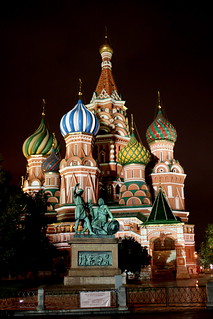
Image credit: Kyle Taylor via Flickr