Physical Address
304 North Cardinal St.
Dorchester Center, MA 02124
Physical Address
304 North Cardinal St.
Dorchester Center, MA 02124

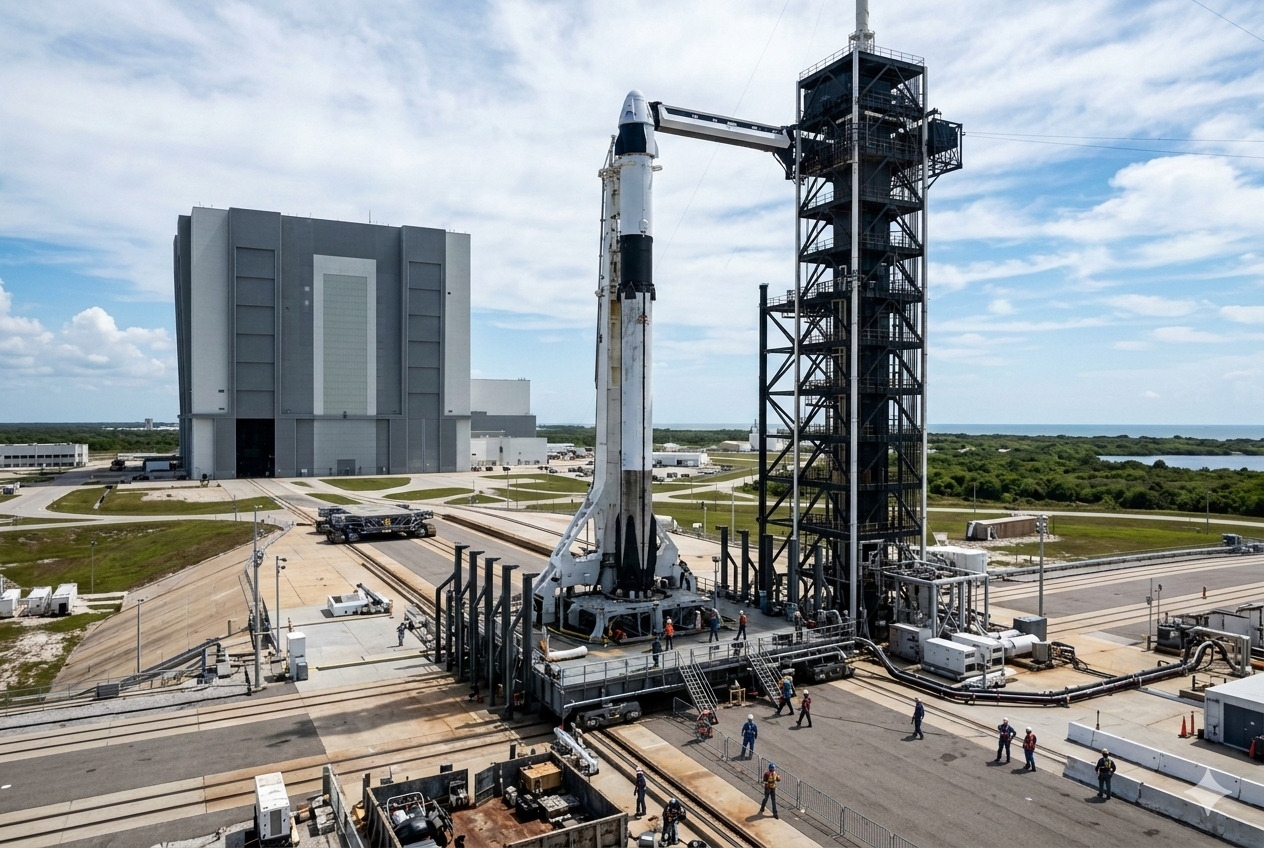
Updated NASA facts and stats for 2026: workforce size, FY2026 budget, ISS visitors and spacewalks, Hubble observations and archive size, Space Shuttle totals, Moon-walker counts, Artemis II status, and FAQs.
NASA is the U.S. civil space agency behind some of the most iconic achievements in modern history—from the Moon landings to the Space Shuttle era to today’s International Space Station and Artemis missions. It’s also a massive science-and-engineering organization with a budget, workforce, and global partnerships large enough to show up in real “by the numbers” stats.
Below is an updated 2026-ready roundup of NASA facts and statistics, including an answer box, key metrics table, and FAQs. Older data is preserved only when it’s labeled clearly by year.
NASA was established in 1958 and today employs just under 18,000 civil servants (with additional contractors and partners). The agency’s FY2026 enacted budget is widely reported at $24.4B in appropriations, with some analyses citing additional supplemental funding that would raise the FY2026 total. NASA’s biggest ongoing human-spaceflight platform is the International Space Station, which has hosted 290+ visitors and seen 277 spacewalks. On the science side, Hubble has made nearly 1.7 million observations and its archive is 400+ TB.
| Metric | Stat | Year / Notes |
|---|---|---|
| NASA established | 1958 | U.S. civil space agency formed |
| NASA civil servant workforce | Just under 18,000 | NASA description of workforce size |
| NASA workforce (OPM-based reporting) | 16,869 | Early 2026; measurement differs from NASA phrasing |
| FY2026 enacted NASA funding | $24.4B | Appropriations figure widely reported (Jan 2026) |
| People who have walked on the Moon | 12 | All Apollo, 1969–1972 |
| Space Shuttle era | 1981–2011 (30 years) | Total missions flown: 135 |
| ISS visitors | 290+ people | From 26 countries |
| ISS spacewalks | 277 | Since December 1998 |
| Hubble observations | ~1.7M | ESA reporting (as of Feb 2025) |
| Hubble archive size | 400+ TB | ESA reporting (as of Feb 2025) |
Hubble Space Telescope (HST) StatsHubble launched in 1990 and continues to be one of the most productive observatories in history.
NASA’s funding is set annually by Congress and is divided across major mission areas (science, exploration, aeronautics, technology, etc.). For FY2026, the enacted appropriations figure commonly reported is $24.4B. Some analyses add supplemental appropriations and cite a higher total for FY2026 overall. Workforce counts also vary depending on whether you’re looking at civil servants only vs. broader contractor/partner labor.
NASA’s technology transfer program publishes an annual Spinoff report highlighting commercial products that benefit from NASA innovations. NASA says it has profiled 2,400+ spinoffs since 1976.
NASA was established in 1958.
12 people have walked on the Moon (Apollo missions, 1969–1972).
NASA flew 135 Space Shuttle missions from 1981 to 2011.
NASA reports 290+ visitors from 26 countries have visited the International Space Station.
NASA lists Peggy Whitson as the record holder for cumulative time in space at 675 days. For single longest spaceflight, NASA lists Frank Rubio at 371 days.