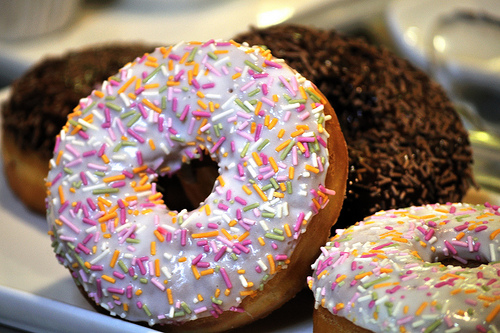
Photo by DaveCrosby
Donuts (also commonly spelled doughnuts) are one of the most recognizable sweet foods in the world. They appear in bakeries, grocery stores, coffee shops, convenience stores, and specialty dessert stores in countless forms, from classic glazed rings to filled pastries and cake-style donuts.
Although donuts are often treated as a fun snack-food topic, their history is surprisingly rich. The modern donut is tied to immigration, language change, regional baking traditions, and major nonprofit and military history through National Doughnut Day. In short: there is a lot more to donuts than frosting and sprinkles.
This updated guide is designed as a clean reference-style resource with confirmed facts, historical context, and quick answers to common questions about donuts.
Donut Facts and Statistics (Quick Answer)
What is a donut?
A donut (traditional spelling: doughnut) is a sweet fried or baked dough pastry, often ring-shaped or filled, and commonly topped with glaze, sugar, icing, or other toppings.
Is it “donut” or “doughnut”?
Both spellings are widely used. “Doughnut” is the traditional spelling, while “donut” is the shortened form that became more common in everyday U.S. usage.
When is National Doughnut Day in the U.S.?
National Doughnut Day is observed on the first Friday in June.
Who started National Doughnut Day?
The Salvation Army established National Doughnut Day in 1938 in Chicago to honor the “Doughnut Lassies” who served donuts to soldiers during World War I.
Key Donut Facts at a Glance
| Fact | Answer |
|---|---|
| Common spellings | Donut / Doughnut |
| Traditional spelling | Doughnut |
| Common modern U.S. spelling | Donut |
| National Doughnut Day (U.S.) | First Friday in June |
| National Doughnut Day started | 1938 |
| Organization behind National Doughnut Day | The Salvation Army (Chicago) |
| Historic Dutch term often linked to donut origins | “Olykoeks” (oil cakes) |
Donut Facts and Statistics
- “Doughnut” is the traditional spelling, but “donut” is widely accepted.
Both forms are commonly used in modern English. In general, “doughnut” is the older/traditional spelling, while “donut” is the shorter variant that became popular in everyday usage and branding. - Donuts have roots in older fried dough traditions.
Histories of the donut commonly trace part of the pastry’s North American story to Dutch settlers and fried doughs often described as “olykoeks” (oil cakes). - National Doughnut Day is celebrated every year on the first Friday in June.
This is one of the most widely recognized recurring observances tied specifically to donuts in the United States. - National Doughnut Day was created in 1938 by The Salvation Army in Chicago.
The day was established to honor Salvation Army volunteers—often called “Doughnut Lassies”—who served donuts and support to soldiers during World War I. - The Salvation Army’s donut connection is part of wartime history, not just food marketing.
The origin story of National Doughnut Day is directly tied to relief work and morale support for troops. - Ring donuts and filled donuts are both core donut categories.
When people say “donut,” they may mean a ring-shaped donut (like glazed) or a filled donut (such as jelly, custard, or cream-filled varieties). - Donuts can be yeast-raised or cake-style.
Yeast donuts are usually lighter and airier, while cake donuts are denser and often made with chemical leavening rather than yeast. - The words “donut” and “doughnut” often appear interchangeably in consumer search behavior.
For publishers and site owners, this means it is usually smart to account for both spellings in headings, FAQs, and internal linking where relevant. - Donuts remain strongly tied to coffee-shop culture.
In the U.S. especially, donuts are commonly marketed alongside coffee, breakfast foods, and quick-service morning menus. - “Donut” is often the preferred spelling in brand and casual usage, while “doughnut” remains common in formal or historical contexts.
This is one reason many articles and dictionaries acknowledge both spellings rather than treating one as strictly incorrect.
Donut History Timeline
- Early origins: Fried dough pastries existed in many cultures long before the modern American donut became standardized.
- Dutch influence in North America: “Oily cakes” / “olykoeks” are frequently cited in donut origin discussions.
- 19th century: The term “doughnut” appears in historical English-language writing and becomes more established.
- 20th century: Donuts become a mainstream bakery and diner staple in the United States.
- 1938: The Salvation Army creates National Doughnut Day in Chicago.
- Modern era: Gourmet donuts, seasonal flavors, and social-media-driven food trends expand donut varieties and presentation styles.
Doughnut vs. Donut: Which Spelling Should You Use?
If you are writing for a general audience, either spelling can work as long as you stay consistent. That said:
- Use “doughnut” if you want the traditional spelling.
- Use “donut” if you want the more casual, modern, and commonly searched form.
- Use both in SEO-friendly content (for example, a title with one spelling and an FAQ mentioning the other) to match how different readers search.
Why Donuts Remain So Popular
Donuts remain popular because they are relatively affordable, widely available, easy to share, and highly customizable. A single product category can cover everything from a basic glazed ring to premium filled pastries with seasonal toppings. That flexibility helps donuts stay relevant across convenience stores, local bakeries, and specialty dessert shops.
They also benefit from strong cultural associations—morning routines, office treats, celebrations, road trips, and holiday promotions—which keeps them visible in everyday life far beyond a single meal category.
FAQ About Donuts
What is the correct spelling: donut or doughnut?
Both are correct. “Doughnut” is the traditional spelling, while “donut” is a shorter spelling that is very common in modern usage.
When is National Doughnut Day?
National Doughnut Day in the U.S. is held on the first Friday in June each year.
Who created National Doughnut Day?
The Salvation Army created National Doughnut Day in Chicago in 1938.
Why was National Doughnut Day created?
It was created to honor Salvation Army volunteers who served donuts and support to soldiers during World War I.
Are donuts and doughnuts the same thing?
Yes. The difference is spelling, not a different food category.
Sources and References
- The Salvation Army USA — National Donut Day
- Encyclopaedia Britannica — Doughnut
- TIME — “Donut” vs. “Doughnut”
Donuts may look simple, but their story touches language, migration, wartime history, and modern food culture. Whether you spell it donut or doughnut, it remains one of the most enduring pastries in the world.

Photo by Anastasiia Chepinska on Unsplash