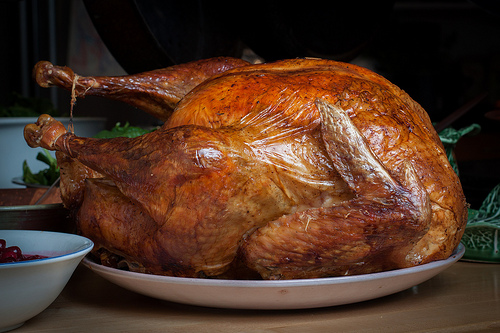
Photo by timsackton
Thanksgiving is one of those holidays that’s equal parts history lesson and comfort-food tradition. In the United States it’s celebrated on the fourth Thursday of November, while in Canada it’s observed on the second Monday of October. Either way, the modern holiday is built around gratitude, family gatherings, and a feast that reliably sparks debates about turkey, stuffing, and whether cranberry sauce should come from a can.
Below are updated Thanksgiving facts and statistics (with clear year labels), plus a quick answer box, a key metrics table, and FAQs.
Thanksgiving (Quick Facts)
U.S. Thanksgiving is celebrated on the fourth Thursday in November (set into federal law in 1941). A major milestone came when President Abraham Lincoln issued a Thanksgiving proclamation in 1863. On the “by the numbers” side, the National Turkey Federation estimates 46 million turkeys are eaten at Thanksgiving, and AAA projected a record 81.8 million Americans would travel 50+ miles over Thanksgiving 2025. In the same year, the American Farm Bureau Federation’s survey estimated a classic Thanksgiving meal for 10 at $55.18 (about $5.52 per person).
Key Metrics Table: Thanksgiving by the Numbers
| Metric | Stat | Year / Notes |
|---|---|---|
| U.S. Thanksgiving date rule | 4th Thursday in November | Set as federal holiday in 1941 |
| Lincoln proclamation milestone | National observance proclaimed | 1863 |
| Turkeys eaten at Thanksgiving | 46 million (estimate) | Widely cited U.S. benchmark (NTF) |
| Thanksgiving travelers (50+ miles) | 81.8 million | AAA forecast for Thanksgiving 2025 (record) |
| Cost of Thanksgiving dinner for 10 | $55.18 | AFBF survey for 2025 (about $5.52/person) |
| Macy’s Thanksgiving Day Parade began | 1924 | First parade held in New York City |
Thanksgiving Facts and Stats (Updated)
- The “First Thanksgiving” story is more complex than a single moment.
A 1621 harvest celebration in Plymouth is widely referenced in popular history, but Thanksgiving traditions evolved over time through local and regional observances that looked different from today’s holiday. - Lincoln’s 1863 proclamation helped standardize the holiday in the U.S.
In 1863, President Abraham Lincoln issued a proclamation calling for a national day of “Thanksgiving and Praise,” helping push Thanksgiving toward a regular national observance. - Thanksgiving’s date was officially set by law in 1941.
The date didn’t always land where it does today. After years of confusion (including a controversial date change in 1939), Congress established Thanksgiving as the fourth Thursday in November and President Roosevelt signed the resolution on December 26, 1941. - Turkey remains the centerpiece—by the tens of millions.
The National Turkey Federation estimates 46 million turkeys are eaten on Thanksgiving. That number is best used as a long-running benchmark rather than a precision count, but it shows the scale of the tradition. - Thanksgiving travel is consistently one of the year’s biggest surges.
AAA projected 81.8 million Americans would travel 50+ miles for Thanksgiving 2025, setting a new record for the holiday period. - The cost of a classic Thanksgiving meal changes year to year.
The American Farm Bureau Federation’s 2025 survey estimated a traditional dinner for 10 at $55.18 (about $5.52 per person). The same report noted it was the third straight year of declines after a record high in 2022. - Cranberries spike hard around Thanksgiving.
One commonly cited estimate is that roughly 20% of annual cranberry consumption occurs during Thanksgiving week—one reason cranberries are practically a seasonal mascot. - The Macy’s Thanksgiving Day Parade is nearly a century old.
The Macy’s parade began in 1924 and has become one of the most recognizable Thanksgiving traditions in the United States. - The White House turkey tradition has a real starting point.
The National Turkey Federation notes that in 1947 President Harry Truman received a live turkey in what became an annual White House tradition (often discussed alongside, but distinct from, the modern “pardon” ritual). - Canada celebrates Thanksgiving too—just earlier.
In Canada, Thanksgiving is observed on the second Monday in October, reflecting different historical and seasonal rhythms than the U.S. holiday.
Bonus historical fact: In 1939, FDR moved Thanksgiving earlier (to extend the holiday shopping season). The dispute ended when Congress set the date by law in 1941.
FAQ: Thanksgiving Facts
When is Thanksgiving in the United States?
Thanksgiving is observed on the fourth Thursday in November in the United States (set into federal law in 1941).
When is Thanksgiving in Canada?
Thanksgiving is observed on the second Monday in October in Canada.
How many turkeys are eaten on Thanksgiving?
A widely cited estimate from the National Turkey Federation is 46 million turkeys eaten at Thanksgiving.
How many people travel for Thanksgiving?
AAA projected 81.8 million Americans would travel 50+ miles over Thanksgiving 2025, a record for the holiday period.
How much does Thanksgiving dinner cost?
The American Farm Bureau Federation’s 2025 survey estimated a classic Thanksgiving dinner for 10 at $55.18 (about $5.52 per person). Costs vary by region, store, and menu choices.

See Also: Interesting Black Friday Facts and Stats