Physical Address
304 North Cardinal St.
Dorchester Center, MA 02124
Physical Address
304 North Cardinal St.
Dorchester Center, MA 02124

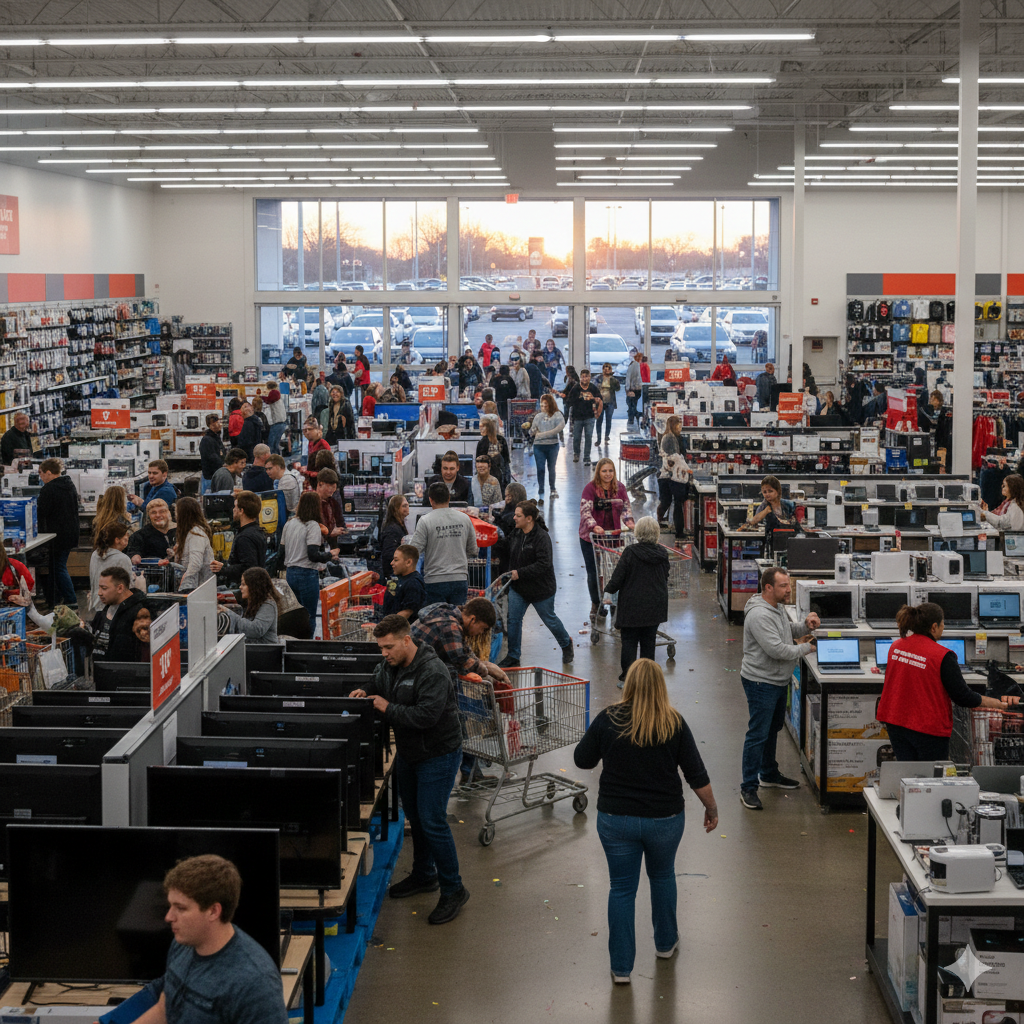
Updated Black Friday facts and stats for 2026: origin story, latest online sales totals, Thanksgiving weekend shopper counts, in-store traffic timing, and FAQs—plus an answer box and key metrics table.
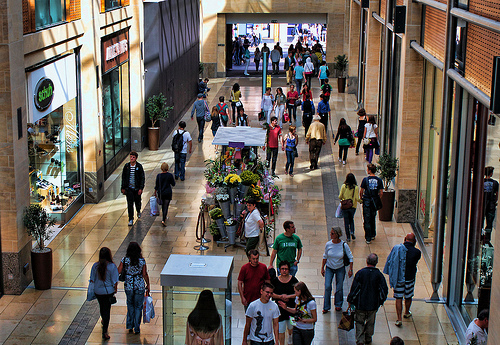
Black Friday is the day after U.S. Thanksgiving—and it’s no longer just a “wake up at 4 a.m.” retail moment. Today it’s a multi-channel shopping surge that blends in-store deals, online doorbusters, app-driven bargain hunting, and promotions that often start weeks earlier.
This updated guide focuses on the most useful Black Friday facts and statistics (with clear year labels), plus a quick answer box, key metrics table, and FAQs.
Black Friday is the Friday after Thanksgiving and is widely treated as the kickoff to the holiday shopping season. The term is commonly traced to Philadelphia in the early 1960s, describing traffic and shopping chaos. Modern Black Friday is increasingly digital: U.S. consumers spent $11.8 billion online on Black Friday 2025 (Adobe Analytics), and the five-day Cyber Week period totaled $44.2 billion online. NRF reported 202.9 million shoppers over Thanksgiving Day through Cyber Monday 2025.
| Metric | Stat | Year / Notes |
|---|---|---|
| Black Friday online sales (U.S.) | $11.8B | 2025 (Adobe Analytics; +9.1% YoY) |
| Cyber Week online total (U.S.) | $44.2B | 2025 (Thanksgiving → Cyber Monday) |
| Shoppers (Thanksgiving → Cyber Monday) | 202.9M | 2025 (NRF/Prosper survey; record) |
| Shoppers planning to shop Black Friday | 130.4M (70%) | 2025 NRF forecast for the weekend |
| In-store traffic peak timing | Afternoon (often noon–4 p.m. / 2–4 p.m.) | Google store-traffic research |
Black Friday Facts and Stats (Updated)Adobe Analytics reported that U.S. consumers spent $11.8 billion online on Black Friday 2025—a new record and a strong year-over-year increase. That’s a clear sign that Black Friday is no longer “mainly in-store.”
Adobe reported $44.2 billion in online sales across the five-day Cyber Week window (Thanksgiving through Cyber Monday) in 2025. NRF’s annual consumer survey counted 202.9 million shoppers across that same holiday weekend.
Even with early deals and Cyber Monday dominance online, NRF projected Black Friday would remain the most popular day, with 70% of weekend shoppers (130.4 million) shopping that Friday.
Multiple Google store-traffic research summaries show Black Friday foot traffic tends to peak in the afternoon (often between noon and 4 p.m. or 2 p.m. and 4 p.m.). Translation: if you want to avoid peak crowds, dawn isn’t the only strategy—mid-morning or later evening can be calmer, depending on the retailer.
In practice, many “Black Friday” discounts now roll out in early November, with retailers stretching promotions across multiple weeks. That’s why one-day stats matter—but so do Cyber Week totals and Thanksgiving weekend shopper counts.
Black Friday is the day after Thanksgiving in the United States (the Friday following the fourth Thursday in November).
The name is commonly traced to Philadelphia in the early 1960s, describing the chaos of traffic and crowds. A later retail-friendly explanation connected “black” to accounting profit (“in the black”).
Adobe Analytics reported $11.8 billion in U.S. online spending on Black Friday 2025.
Cyber Monday is often the largest single online shopping day, but Black Friday can grow faster in some years and remains the most popular day overall for many shoppers (online + in-store combined).
Store traffic often peaks in the afternoon (commonly around noon–4 p.m. or 2–4 p.m.), based on Google store-traffic research.
See also: Cyber Monday History, Facts and Stats