10 Fun Facts About Fireworks for 2026
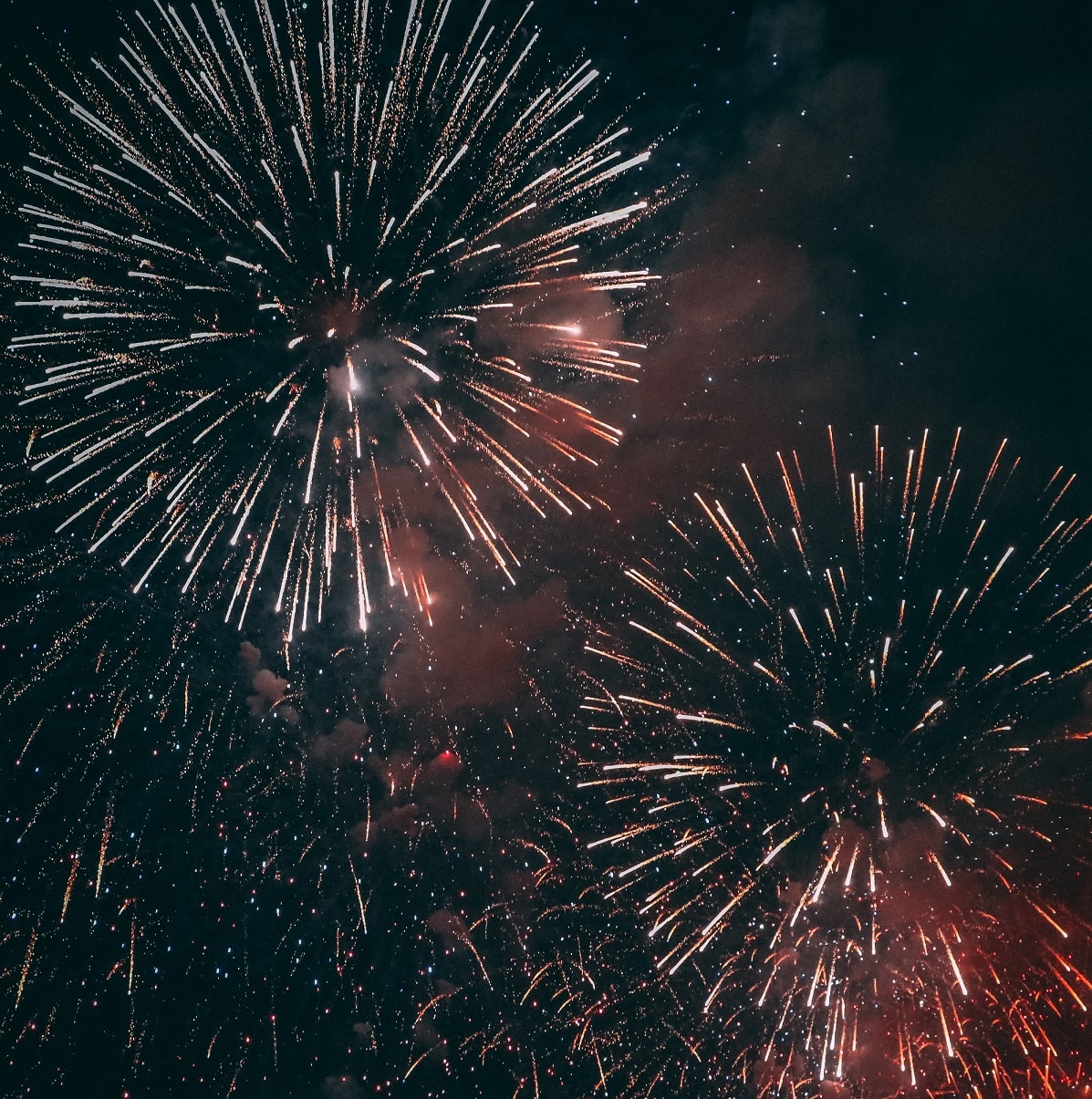
Photo by Kristian Løvstad on Unsplash
Fireworks have been used for celebration for centuries—mixing chemistry, craftsmanship, and showmanship into a few seconds of color and sound. Below are 10 confirmed, source-backed facts about where fireworks came from, how they work, and a few record-setting milestones.
Fast fireworks facts
- Where fireworks began: Early “firecracker” effects trace back to ancient China, with gunpowder-based fireworks developing later.
- Why fireworks have colors: Different metal elements (and compounds) produce different flame colors.
- Why fireworks boom: The “bang” comes from rapid combustion and expanding gases.
10 fun facts about fireworks
- Fireworks trace their roots to ancient China. Historical accounts often describe early “exploding bamboo” used in China centuries before modern fireworks. Later, gunpowder-based fireworks developed as pyrotechnic techniques advanced. Source
- Gunpowder (the foundation of traditional fireworks) emerged around the 9th century. Multiple historical summaries place the invention of gunpowder in China around the ninth century, which accelerated the evolution from simple noise-making effects into true fireworks. Source
- Fireworks spread from Asia to Europe over time. As knowledge of gunpowder traveled west through trade and conflict, fireworks became part of major public celebrations in Europe and eventually beyond. Source
- The “colors” are chemistry: different elements create different hues. Firework colors come from metal elements and compounds—barium for green, strontium for red, copper for blue, and sodium for yellow (among others). Source
- White/silver effects often come from metals like magnesium, titanium, or aluminum. Bright flashes and silvery-white effects are commonly associated with metal powders and alloys used in pyrotechnics. Source
- The “peony” is one of the most common shell effects. In pyrotechnic terminology, a peony is typically described as a spherical burst of colored stars—one of the staple looks in modern aerial shows. Source
- A Guinness World Records milestone: a massive aerial shell was set off in the UAE. Guinness World Records reported a record for the largest aerial firework shell at a New Year celebration in Ras Al Khaimah, United Arab Emirates (reported shell mass: 1,087.26 kg / 2,397 lb). Source
- Fireworks became part of U.S. Independence Day celebrations early in American history. Historical reporting notes that fireworks were used for July 4 celebrations as early as 1777 in Philadelphia. Source
- Modern fireworks can create short-term spikes in air pollution. Monitoring and reporting on major fireworks nights has documented sharp increases in particulate pollution and airborne metals associated with pyrotechnics. Source
- Fireworks are a global industry, and China is a major producer and exporter. Major historical overviews of fireworks note China’s long-running central role in manufacturing and exporting fireworks worldwide. Source
FAQ
Who invented fireworks?
Historical sources commonly trace early firecracker-like effects and the later development of fireworks to China, with gunpowder-based fireworks emerging after the invention of gunpowder. Reference
What chemicals make fireworks different colors?
Color is produced by specific elements and compounds—barium (green), strontium (red), copper (blue), and sodium (yellow) are widely cited examples. Reference
What is the “peony” effect in fireworks?
A peony is typically described as a spherical break of colored stars—one of the most common aerial shell looks. Reference
That’s the list! If you have a favorite fireworks show or a favorite effect (peony, chrysanthemum, willow, etc.), I’ll happily expand this post with a “Types of Fireworks Effects” section using pyrotechnic glossary sources.